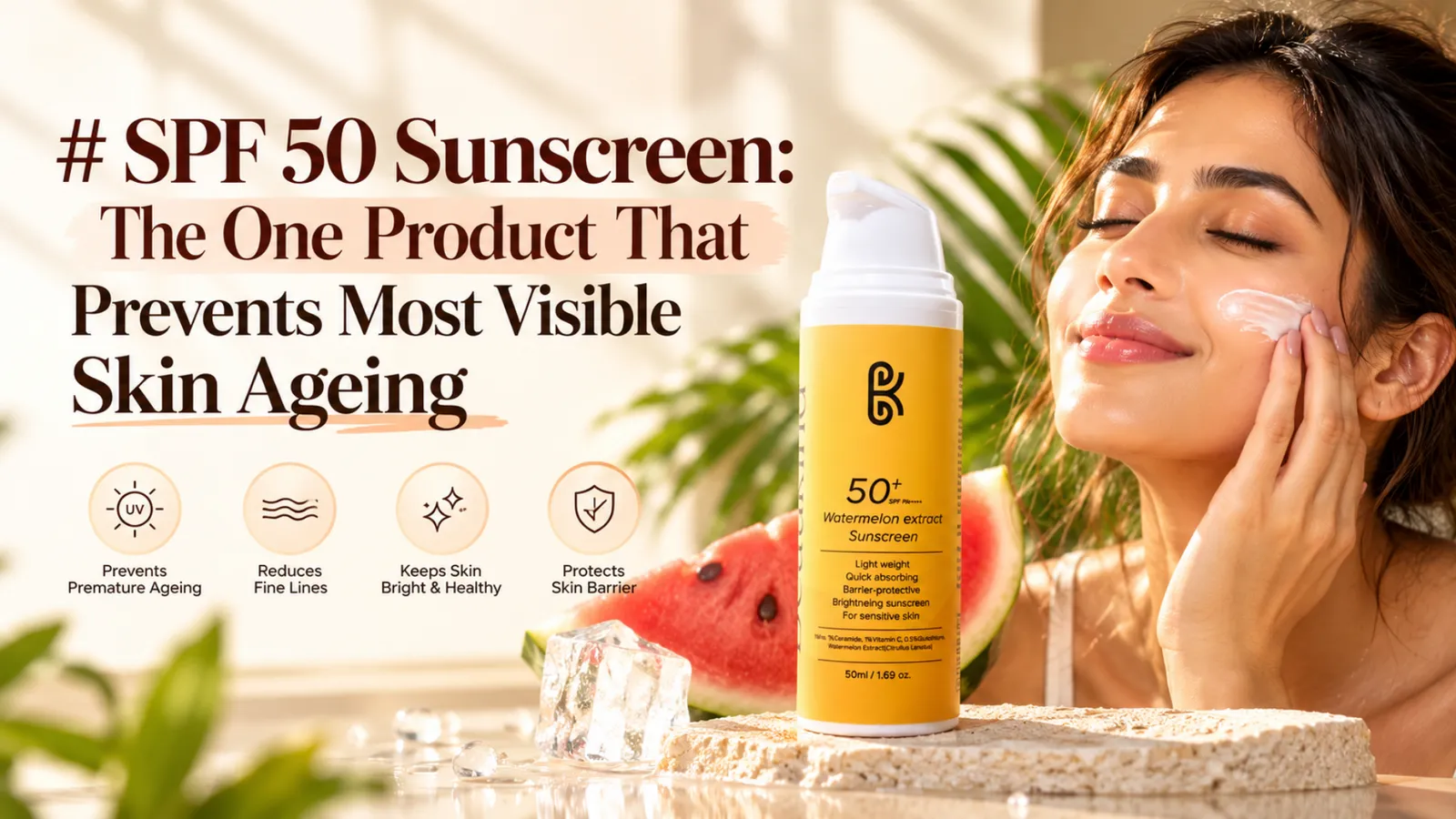
Dermatologists widely agree that daily sunscreen use is the most effective anti-ageing step you can take — more impactful than any serum or treatment. UV rays break down collagen, trigger pigmentation, and cause the majority of fine lines and dark spots most people attribute to "ageing."
Why Broad-Spectrum SPF 50 Matters
Our Beaukind Sunscreen is a broad-spectrum SPF 50 formula, meaning it protects against both UVA rays (which cause premature ageing and deep skin damage) and UVB rays (which cause sunburn). It's built with Zinc Oxide, Niacinamide, Vitamin E, and Watermelon Extract for a non-greasy, gel-based formula that doesn't leave a white cast.
What Each Ingredient Does
- Zinc Oxide — a physical UV filter that reflects UVA and UVB rays.
- Niacinamide — reduces redness and improves skin tone over time.
- Vitamin E — an antioxidant that supports the sunscreen's protective effect.
- Watermelon Extract — soothes and hydrates, preventing that heavy, sticky sunscreen feel.
How to Apply Sunscreen Correctly
Apply liberally as the last step of your morning routine, 15–20 minutes before sun exposure — after moisturizer and any serums. Reapply every 3–4 hours if you're outdoors, or after sweating or swimming. Most people apply far too little sunscreen; a full face needs roughly a coin-sized amount.
Common Sunscreen Myths
- "I don't need sunscreen indoors." UVA rays penetrate glass and contribute to ageing even indoors, especially near windows.
- "Darker skin tones don't need SPF." All skin tones are affected by UV damage and pigmentation, though the visible effects can differ.
- "Sunscreen once a day is enough." Reapplication every 3–4 hours is necessary for continued protection.