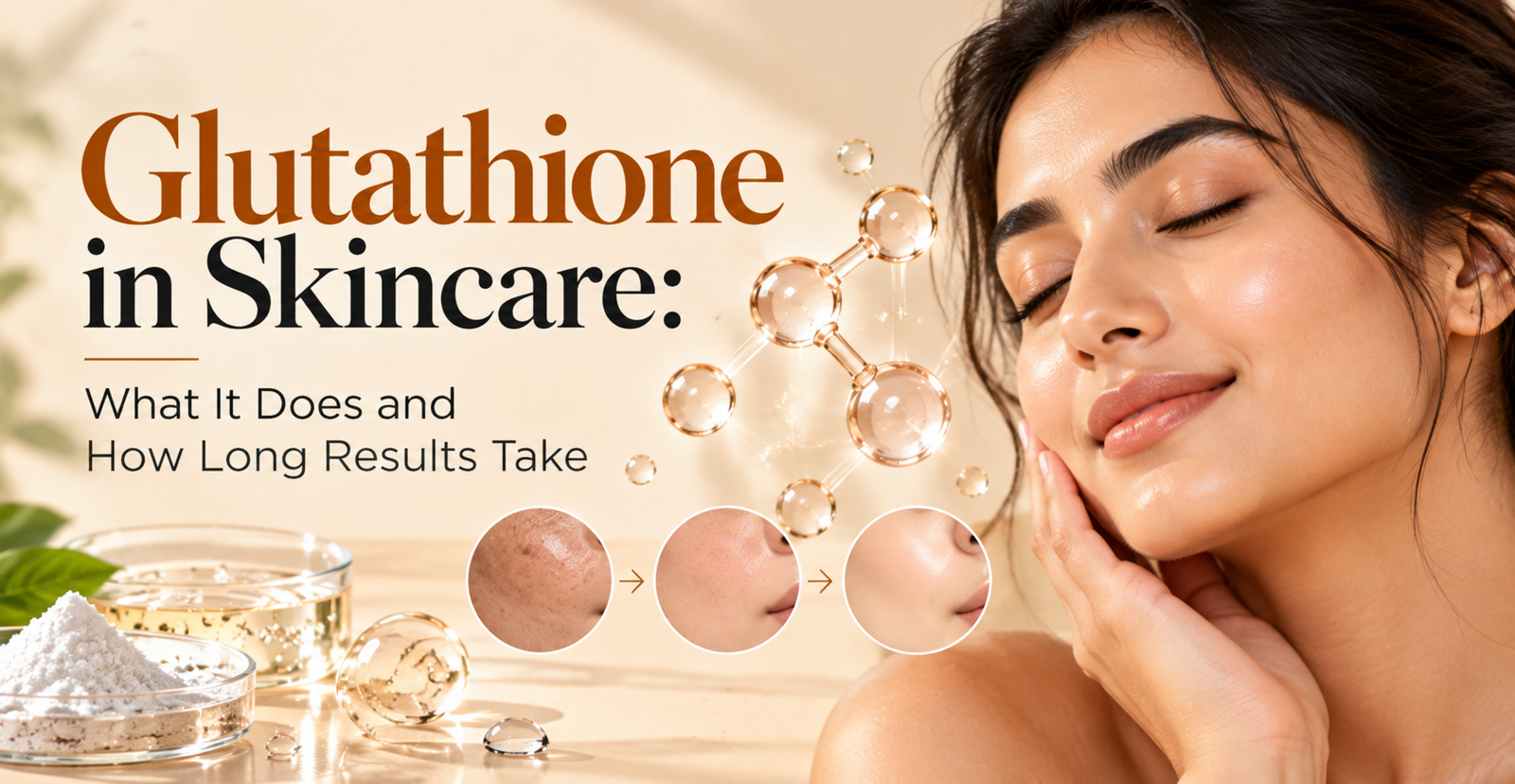
Glutathione in skincare is one of the most talked-about brightening ingredients right now, especially heading into festive season when everyone wants an even, glowing complexion. But how does it actually work, and how long before you see a difference?
Glutathione is a naturally occurring antioxidant that, when applied topically, may help reduce oxidative stress on skin cells and support a more even skin tone over time. It is believed to work partly by limiting the activity of tyrosinase, an enzyme involved in melanin production, which is why it is popular in brightening serums. Results are gradual and depend on consistent, daily use rather than a one-time application.
What Does Glutathione Do for Skin?
Glutathione's main role in skincare is as an antioxidant that helps the skin manage everyday damage from pollution, UV exposure, and oxidative stress. Because it may limit excess melanin formation, it is often included in products aimed at dullness, uneven tone, and post-monsoon pigmentation that many people in India notice around this time of year.
Key Takeaways
- Glutathione is an antioxidant, not a bleaching agent — it supports tone evenness rather than altering natural skin colour.
- Topical glutathione works gradually; visible changes in tone usually take several weeks of regular use.
- It pairs well with other actives like Vitamin C and Niacinamide, but should be introduced one at a time to watch how skin responds.
- Daily sunscreen is essential — glutathione's benefits are undone quickly by unprotected UV exposure.
- Beaukind's Faceserum is formulated with brightening actives including Glutathione for this exact concern.
How Long Does Glutathione Take to Show Results on Skin?
Most people using a glutathione-based serum or product consistently, twice daily, start noticing a subtle improvement in skin brightness within 3 to 4 weeks. For more visible changes in tone evenness and dark spots, dermatology reviews generally point to a timeline closer to 8 to 10 weeks of uninterrupted use. Results vary by skin type, sun exposure, and how consistently the product is used.
| Timeframe | What to Expect |
|---|---|
| 2–4 weeks | Slightly brighter, less dull-looking skin |
| 6–8 weeks | More even tone; some reduction in minor discolouration |
| 10+ weeks | Noticeable tone evenness with consistent use and sunscreen |
How Do You Use a Glutathione Serum Correctly?
Apply a glutathione-based serum on cleansed, dry skin, both morning and night, before moisturizer. A gentle facewash first helps the serum absorb better. Follow up with a moisturizer to lock in hydration, and never skip sunscreen during the day, since unprotected sun exposure can undo brightening progress.
Can You Use Glutathione with Vitamin C or Niacinamide?
Glutathione generally layers well with Niacinamide and can be alternated with Vitamin C, though combining strong actives on sensitive skin may cause irritation. If you are new to actives, introduce one ingredient at a time and watch how your skin reacts over a week or two before adding another. For more on combining actives safely, see our guide on using niacinamide with vitamin C.
Is Glutathione Safe for All Skin Types?
Topical glutathione is generally considered gentle and suitable for most skin types, including sensitive skin, since it works as an antioxidant rather than an exfoliant. That said, a patch test is always recommended before introducing any new active to your routine, and anyone with an existing skin condition should consult a dermatologist first. If you notice redness, itching, or new breakouts after starting a new serum, discontinue use and give your skin a short break before trying it again more slowly.
Topical Glutathione vs Oral Supplements vs Injections
Glutathione is available in several forms, and it helps to understand the difference before choosing one. Topical serums are applied directly to the skin and work locally on the surface layers, which is why they are the most common and accessible option for a daily skincare routine. Oral supplements are taken by mouth and are marketed for overall skin brightening, though their absorption and real-world effectiveness are debated among dermatologists, and results are not guaranteed. Injectable glutathione is administered by a medical professional and carries its own medical considerations and risks, so it should only be explored under proper supervision. For most people simply looking to add a brightening step to their existing routine, a well-formulated topical serum remains the simpler, lower-risk starting point.
Glutathione and Post-Monsoon, Pre-Festive Skin
October in India often brings a mix of lingering monsoon pigmentation and the start of drier, early-winter skin. A brightening ingredient like glutathione, combined with a good moisturizer to support the skin barrier, can be a useful part of a pre-festive routine. The American Academy of Dermatology notes that consistent use of brightening and barrier-supporting ingredients, alongside daily sunscreen, is one of the more reliable ways to work toward an even-looking complexion over time. Reviews published in dermatology journals such as the Journal of Clinical and Aesthetic Dermatology have also discussed antioxidant ingredients, including glutathione, as part of broader approaches to managing uneven skin tone, while generally noting that more large-scale, long-term studies are still needed to fully confirm outcomes.
Beaukind is an Indian, cruelty-free skincare brand, and its Faceserum includes Glutathione along with other brightening actives suited to this kind of routine. Many customers choose to pair it with the Facewash + Serum combo to build a simple two-step brightening habit without overcomplicating their day.
Building Glutathione Into a Simple AM/PM Routine
A practical way to introduce glutathione without overwhelming your skin is to keep the rest of your routine minimal while it settles in. In the morning, cleanse, apply the glutathione serum, follow with a lightweight moisturizer, and finish with sunscreen. At night, cleanse again, apply the serum, and seal it in with moisturizer. Try to avoid introducing other new actives, such as a fresh exfoliating acid or a new retinoid, in the same week you start glutathione, since this makes it harder to tell what your skin is actually reacting to if any irritation shows up.
Frequently Asked Questions
Does glutathione serum lighten skin permanently?
No. Glutathione's brightening effects on skin tone are not permanent and are maintained only with continued, regular use. Stopping use typically means the skin gradually returns to its baseline tone over time.
Can I use glutathione serum every day?
Yes, glutathione serums are generally designed for daily AM and PM use. Consistency matters more than frequency spikes, so using it twice daily as directed tends to work better than occasional heavy use.
Does glutathione help with dark spots from sun or acne?
It may help support a more even tone over time, including some post-acne discolouration, but results vary by individual and severity. For stubborn or persistent dark spots, consulting a dermatologist is recommended.
What should I apply after glutathione serum?
Follow with a moisturizer to support the skin barrier, and always apply sunscreen during the day. At night, moisturizer alone is usually sufficient after the serum.
Is glutathione the same as skin bleaching?
No. Bleaching agents forcibly lighten skin, while glutathione works as an antioxidant that may help manage melanin production and oxidative stress, supporting a more even-looking tone rather than altering your natural skin colour.
Can teenagers use glutathione serum?
It can generally be used by older teens dealing with dullness or uneven tone, but a patch test is advised, and anyone under 18 should ideally check with a dermatologist or guardian before starting a new active ingredient routine.
Written by the Beaukind Skincare Team.