If you read the label of almost any good moisturizer, you will find two names again and again: ceramides and hyaluronic acid. They sound technical, and they are often described as if they do the same job. They do not. Each plays a different role in keeping skin comfortable, and understanding the difference helps you choose and use products more wisely. This guide explains what ceramides and hyaluronic acid are, what each does, and how to use them together.
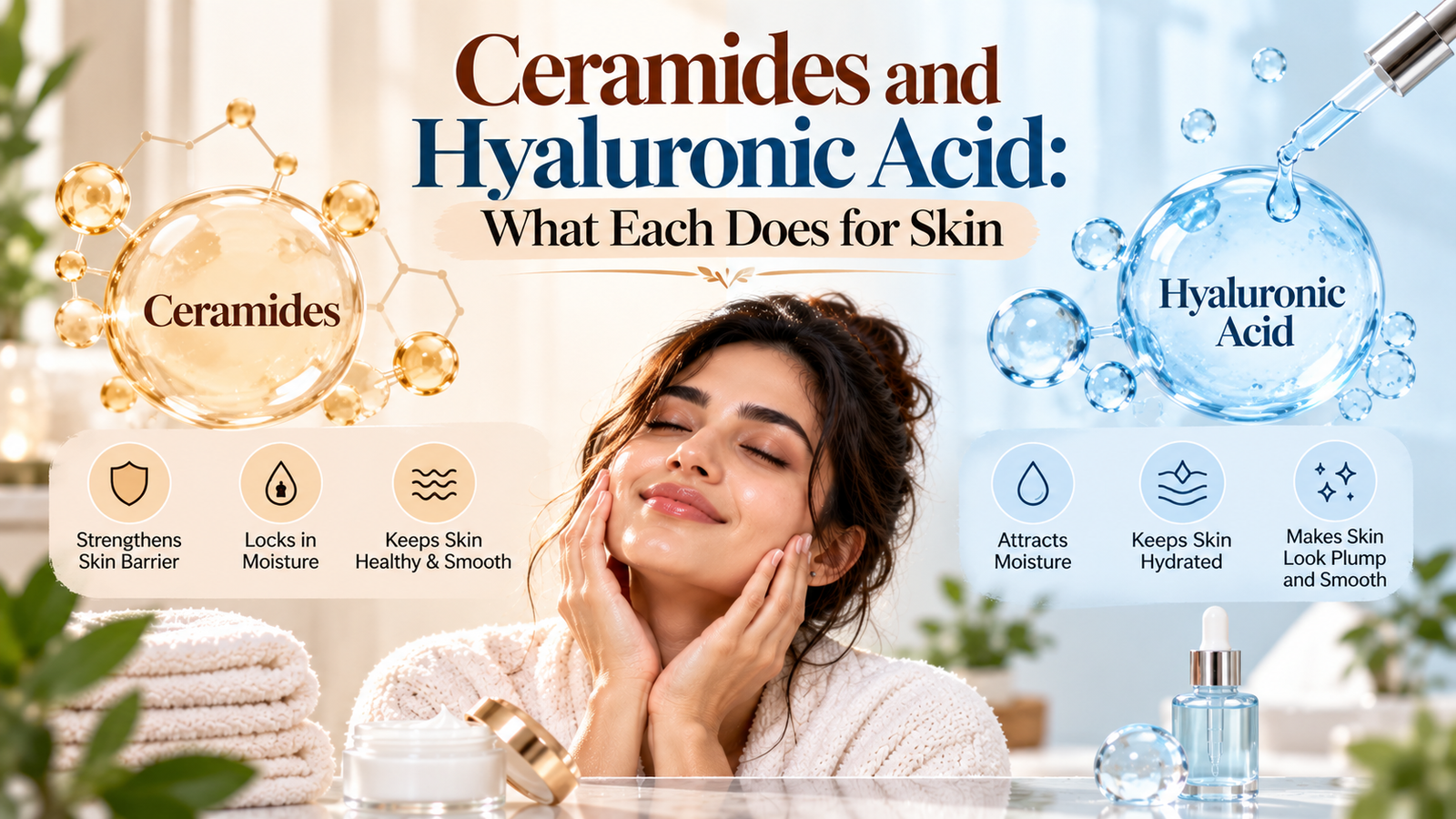
Quick answer: Hyaluronic acid is a humectant that attracts water and helps skin feel hydrated and plump. Ceramides are fat-like molecules that are part of the natural skin barrier and help lock moisture in. Used together, hyaluronic acid brings water to the skin and ceramides help hold it there, which is why they are so often paired in moisturizers.
What Is Hyaluronic Acid?
Hyaluronic acid is a substance found naturally in the skin and connective tissue. It can hold a large amount of water relative to its weight, which makes it a popular ingredient in skincare. When you apply a product with hyaluronic acid, it draws water into the outer layers of the skin and gives a smoother, more cushioned feel. It is lightweight, suits most skin types and is a common ingredient in serums and gel moisturizers.
What Are Ceramides?
Ceramides are lipids, which means they are fat-like molecules. Together with cholesterol and fatty acids, they form the mortar between the skin cells, like the cement between bricks. This layer keeps water in and helps protect the skin from irritants and pollution. When ceramide levels are low, for example because of harsh cleansing, cold dry weather or over-exfoliation, skin can feel dry, tight or sensitive. Using skincare that contains ceramides helps support the barrier.
Ceramides vs Hyaluronic Acid: Key Differences
| Hyaluronic acid | Ceramides | |
|---|---|---|
| Type | Humectant (water-binding) | Lipid (barrier-supporting) |
| Main job | Draws and holds water | Seals moisture, supports the barrier |
| Texture in products | Light, gel or serum | Creamier, richer |
| Best for | Dehydrated, dull or tight skin | Dry, sensitive or damaged-barrier skin |
How Do You Use Ceramides and Hyaluronic Acid Together?
- Cleanse gently with lukewarm water.
- While your skin is still slightly damp, apply a hydrating serum with hyaluronic acid.
- Follow with a moisturizer that contains ceramides to hold the water in.
- In the morning, finish with sunscreen.
The order matters because hyaluronic acid works best when the skin has some moisture to attract, and a moisturizer on top helps stop that water from evaporating.
Which Skin Types Benefit Most?
- Dry skin: needs both, with a focus on ceramide-rich moisturizers.
- Oily skin: can use lightweight hyaluronic acid and a gel-cream with ceramides.
- Sensitive skin: benefits from ceramides because they support a more resilient barrier.
- Combination skin: a light hydrating serum and a balanced moisturizer usually work well.
Common Mistakes With Hydrating Ingredients
- Using hyaluronic acid on completely dry skin and not sealing it in with moisturizer.
- Expecting a serum alone to repair a dry barrier.
- Over-exfoliating, which undoes the work of barrier-supporting ingredients.
- Skipping sunscreen, which can damage the barrier over time.
Where Does Beaukind Fit In?
Beaukind is an Indian, cruelty-free skincare brand, and its approach is to combine skin-supporting ingredients in simple formulas. The Beaukind Moisturizer is a daily, barrier-supporting formula that brings together ceramides, hyaluronic acid, niacinamide, glutathione and rice water, so you get hydration and barrier support in a single step. For more on why the barrier matters, read our explainer on why moisturizing is non-negotiable for your skin barrier, and see how winter changes your routine in our guide to a winter skincare routine for dry skin.
How Do These Ingredients Feel in Different Seasons?
In humid months, many people feel comfortable with just a light gel moisturizer that contains hyaluronic acid, because the air itself already supplies moisture. When the weather turns cooler and drier, the skin loses water faster, and ceramides become more important to hold on to what you apply. This is why a lightweight serum and a gel-cream may feel enough in the monsoon, while a creamier ceramide moisturizer feels better in winter. Adjusting texture with the season is often more useful than changing your whole routine.
What Else Supports a Healthy Skin Barrier?
Ingredients are only one part of the story. Habits matter just as much. Wash your face with lukewarm water and a gentle cleanser, avoid over-exfoliating, and always use sunscreen in the morning because ultraviolet light can damage the barrier over time. Niacinamide is also widely used to support the barrier and help the skin feel more balanced, so it often appears alongside ceramides and hyaluronic acid in modern moisturizers. Sleep, stress and a balanced diet also play a supporting role in how comfortable your skin feels.
How Long Before You Notice a Difference?
Results vary from person to person, and nothing is guaranteed. Many people feel more comfortable and hydrated within a few days to two weeks of consistent use, because humectants and moisturizers work on the surface quickly. Barrier repair takes longer, since the skin renews itself over several weeks. Stay consistent, avoid adding many new products at once, and speak to a dermatologist if your skin stays irritated.
Can You Use Ceramides and Hyaluronic Acid With Other Actives?
Yes, and they often make other actives easier to tolerate. A moisturizer with ceramides can cushion the skin when you use ingredients such as niacinamide, vitamin C or a gentle exfoliant. If you use acids or other strong actives, apply hydration after them to keep skin comfortable. When your skin feels tight or stings, reduce the number of actives and focus on hydrating and barrier-supporting products until it calms down.
How Do You Choose a Good Hydrating Moisturizer?
Read the label and look beyond the marketing. A good moisturizer for most skin types combines a humectant such as glycerin or hyaluronic acid, a barrier-supporting ingredient such as ceramides, and a texture that you enjoy wearing every day. Fragrance-free or lightly fragranced formulas are usually kinder for sensitive skin. Finally, choose a size and texture that suits your routine, because the best moisturizer is the one you use consistently, morning and night.
Who Should Be Careful With New Products?
If you have very sensitive skin, a history of allergies, eczema or active acne, introduce any new product carefully. Do a patch test behind the ear or on the inner forearm, wait a day, and stop if you notice redness, itching or burning. A dermatologist can suggest ingredients and routines that fit your skin condition and avoid unnecessary trial and error.
Key Takeaways
- Hyaluronic acid attracts and holds water; ceramides help seal moisture in and support the barrier.
- They work in different ways and are best used together.
- Apply hydrating ingredients on slightly damp skin and seal with a moisturizer.
- Oily skin can still benefit from lightweight hydration.
- See a dermatologist if dryness comes with itching, cracks or a rash.
Written by the Beaukind Skincare Team.