You start a new skincare product with high hopes, and a week later your skin looks worse. Is the product not working, or is it just doing its job? This is the question behind skin purging vs breakouts, and the answer matters because the correct response is very different. This guide explains what each one looks like, how to tell them apart, and what to do next.
Quick answer: Skin purging is a short-term increase in small pimples after starting an exfoliating or turnover-boosting active, usually in your normal breakout areas, and it settles within a few weeks. A true breakout or reaction brings pimples in new places, often with redness, itching or burning, and it does not improve over time. If you are unsure, stop the product and ask a dermatologist.
What Is Skin Purging?
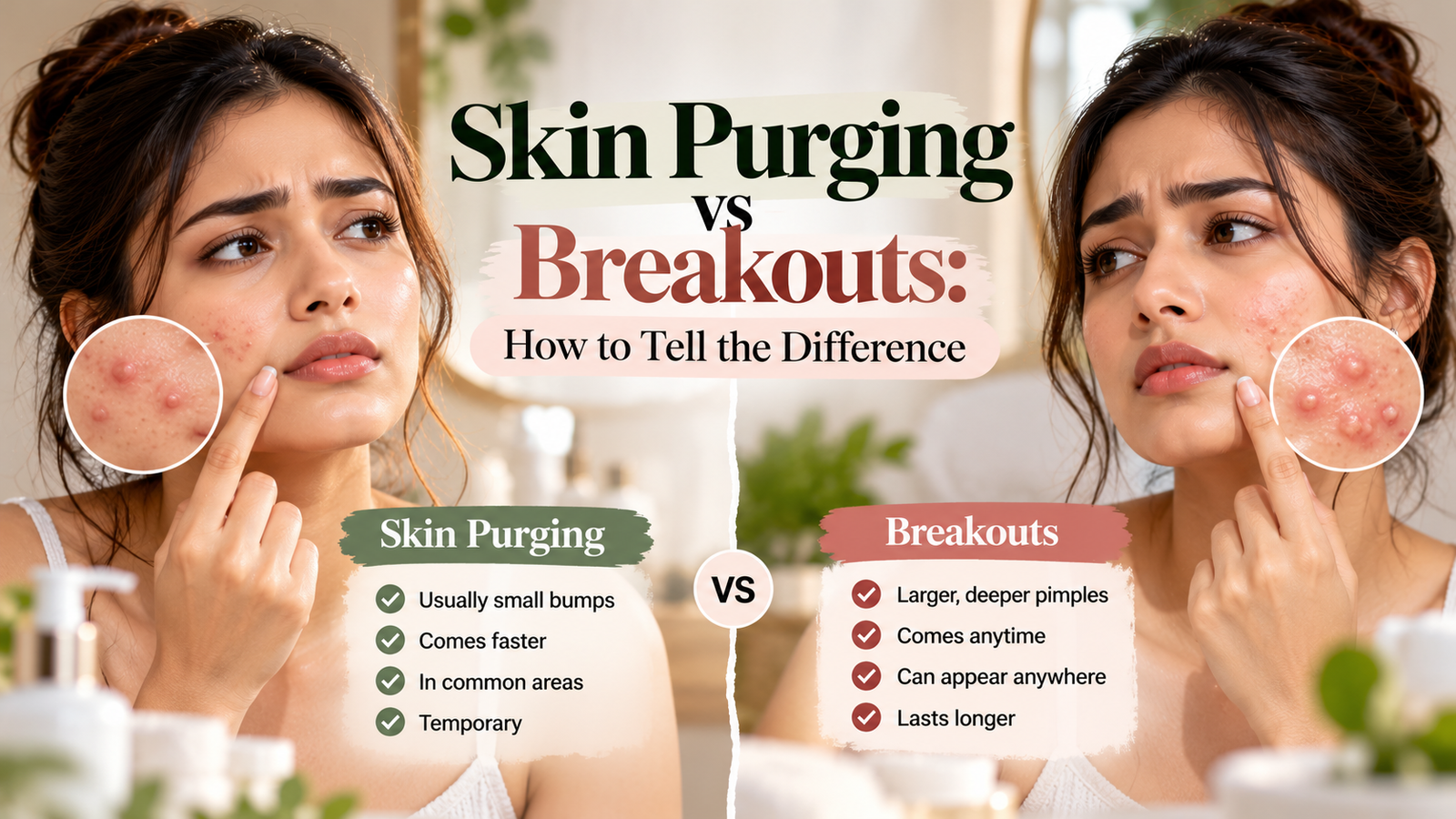
Your skin continually makes new cells and sheds old ones. Ingredients that speed up this process, such as AHAs, BHAs and retinoids, can bring forward the clogged material that was already under the surface. That is why some people see small whiteheads and blackheads soon after starting these products. It is a short-term effect of faster turnover rather than a sign that the product is damaging the skin.
What Is a Breakout From a Bad Reaction?
A reaction is different. It happens when a product or ingredient does not suit your skin, either because it is too strong, your skin barrier is weak, or you are sensitive or allergic to one of the ingredients. Signs include redness, burning, stinging, itching, swelling, dry flaky patches and bumps in areas where you do not normally break out. Reactions do not improve with time, and they usually get worse if you keep using the product.
Skin Purging vs Breakouts: How Can You Tell the Difference?
| Sign | Purging | Breakout or reaction |
|---|---|---|
| Trigger | New exfoliating or turnover-boosting active | Any new product, often heavy or irritating |
| Location | Your usual breakout areas | New areas of the face |
| Type of spots | Small whiteheads and blackheads | Painful, inflamed or itchy bumps, rash |
| Duration | Settles in about 4 to 6 weeks | Continues or worsens |
| Skin comfort | Mostly comfortable | Burning, stinging, redness |
Which Products Can Cause Purging?
True purging is mainly linked with exfoliating acids and retinoids. A peeling solution that contains AHAs or BHAs can bring clogged pores to the surface when you first start using it. Gentle cleansers, moisturizers and sunscreen do not usually cause purging. So if a basic moisturizer gives you new pimples, it is more likely that the formula is too heavy or does not suit you, rather than a purge.
How Should You Handle Purging Safely?
- Introduce one new active at a time, so you know what is responsible.
- Start slowly, such as once or twice a week, and increase only if your skin is comfortable.
- Keep the rest of your routine simple: gentle cleanser, moisturizer and sunscreen.
- Do not pick or squeeze spots, which can cause marks and scars.
- Avoid adding other strong products on top, such as scrubs.
- Give your skin four to six weeks before judging the result.
When Should You Stop and See a Dermatologist?
Stop using the product and speak to a doctor if you notice burning, swelling, severe redness, a rash, painful cystic spots or breakouts that continue past six weeks. A dermatologist can tell whether your skin is reacting, whether you have acne that needs treatment, and which products are safe for you.
How Does Beaukind Fit Into This?
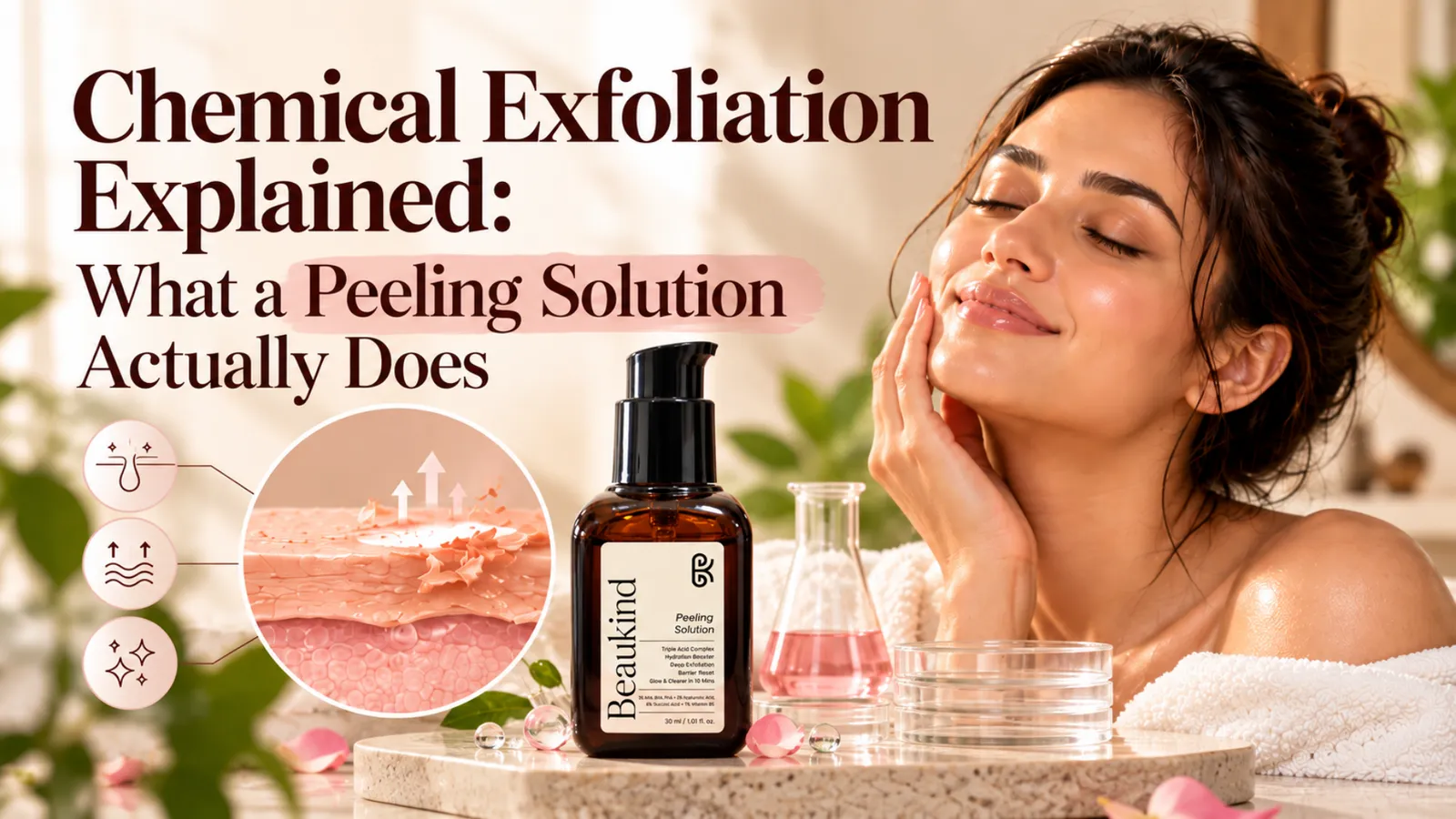
Beaukind is an Indian, cruelty-free skincare brand, and its range is built around simple, step-by-step routines. If you want to try an exfoliating step, start slowly with the Beaukind Peeling Solution and follow it with a barrier-supporting moisturizer and daily sunscreen. To understand how acid exfoliation works and how often to use it, read our guide to chemical exfoliation and what a peeling solution actually does. And if you use several actives, check which ones should not be combined in our post on skincare ingredients you should not mix.
What Else Can Cause Breakouts After Starting a Routine?
Not every new pimple is caused by the product you just added. Several everyday factors can play a part, and it helps to look at the whole picture before blaming one item.
- Heavy or oily products that clog pores on already oily or acne-prone skin.
- Over-washing or scrubbing, which weakens the barrier and can trigger more oil and irritation.
- Hormonal changes, stress and lack of sleep, which commonly affect acne.
- Dirty pillowcases, phone screens and touching the face.
- Seasonal changes such as humidity, sweat and pollution.
Keeping a short note of when you started each product and when spots appear can help you see patterns and have a more useful conversation with a dermatologist.
How Do You Build a Calm Routine During a Purge?
If you suspect purging, keep everything else as simple as possible. Use a gentle cleanser, a barrier-supporting moisturizer and daily sunscreen, and reduce the frequency of the active rather than stopping suddenly if your skin is otherwise comfortable. Avoid adding scrubs, extra acids or strong spot treatments at the same time. Think of it as giving your skin room to adjust, because layering more products on top of a purge is a common reason it feels worse than it needs to.
Common Myths About Skin Purging
- Myth: Purging means the product is working perfectly. Fact: It can happen with a suitable product, but it is not proof that a product is good for you.
- Myth: Any breakout is purging. Fact: Many breakouts are simply reactions or unrelated acne.
- Myth: You must push through any discomfort. Fact: Burning, swelling or rash are signs to stop.
How Can You Reduce the Chance of a Rough Start?
The best way to avoid a stormy start is to go slowly. Patch test a new product on a small area first, begin with a low frequency, and give each change at least two weeks before adding something else. Take a clear photo in the same light once a week, because day-to-day changes in your skin are easy to misjudge in the mirror. If your skin is already irritated, repair the barrier first with gentle cleansing and moisturizer, and only then introduce an exfoliating step.
Key Takeaways
- Purging is a short flare of small spots after starting an exfoliating or turnover-boosting active.
- It appears in your usual breakout areas and usually settles in a few weeks.
- Burning, itching, swelling or new-area breakouts point to a reaction, not purging.
- Add one new active at a time and start slowly.
- When in doubt, stop the product and see a dermatologist.
Written by the Beaukind Skincare Team.