Turn over any skincare bottle and you will find a long list of names that look like a chemistry exam. Most people ignore it and trust the front of the pack, but the ingredient list is where the real information is. Learning how to read a skincare ingredient list does not need a science degree. With a few simple rules you can understand what a product is made of, what it is likely to do, and whether it is likely to suit your skin.
Quick answer: To read a skincare ingredient list, start from the top: ingredients are generally listed from highest to lowest concentration, so the first five or so make up most of the product. Look for the active ingredients you want, check for known irritants such as strong fragrance if your skin is sensitive, and remember that a patch test is the best check of all.
How Is an Ingredient List Ordered?
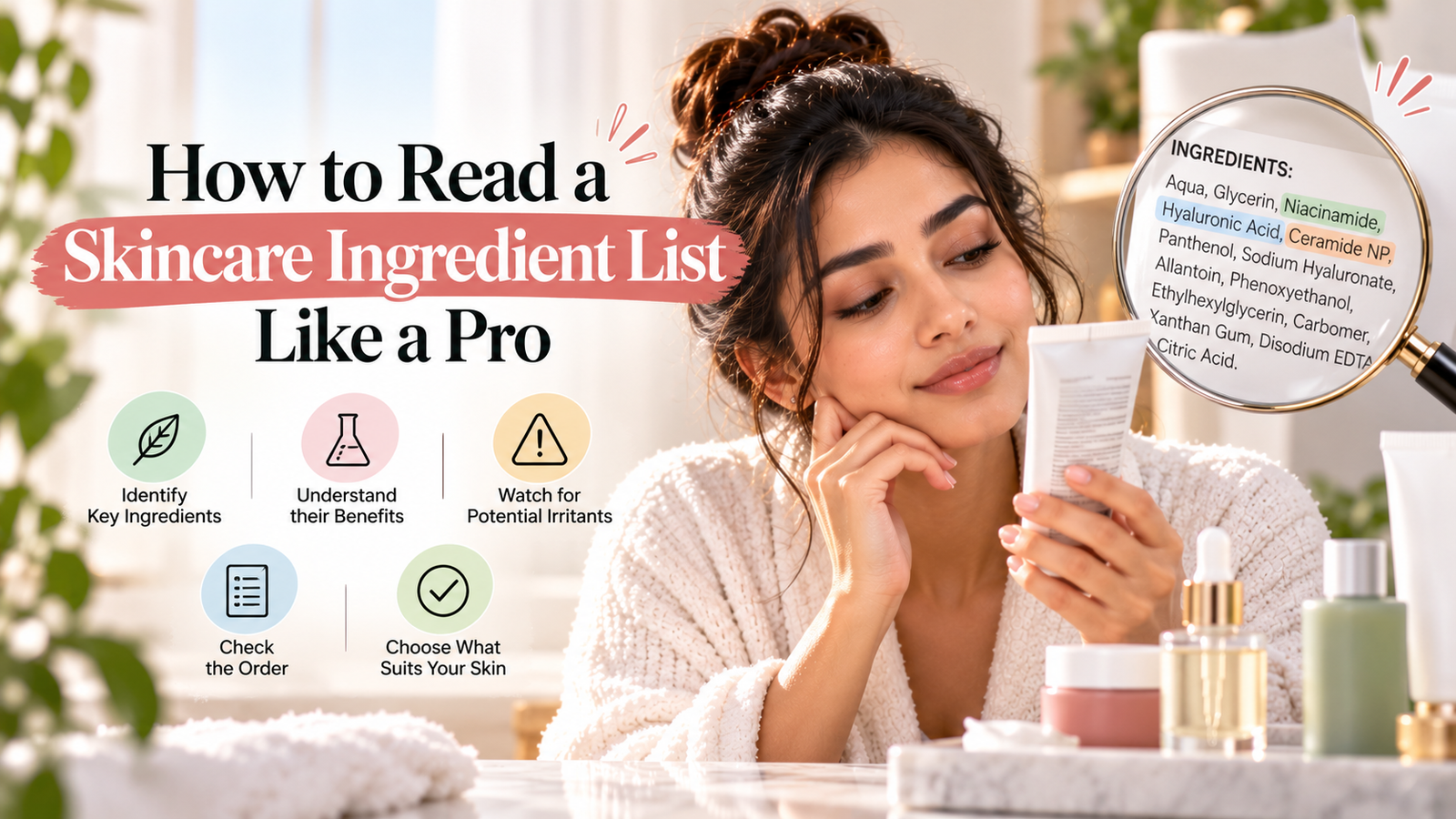
In most countries, including India, ingredients are listed in descending order of concentration. This rule usually applies down to about one percent, and anything below that can appear in any order. In practice, the first few ingredients tell you what the product is mostly made of, which is often water, a humectant such as glycerin and an emollient. Powerful actives are often used in small amounts, so seeing them in the middle of the list is normal and not automatically a bad sign.
What Are the Common Ingredient Groups?
Most skincare products are built from a few groups of ingredients. Knowing these groups makes a list much less intimidating.
- Water (Aqua): the base of most creams, lotions and serums.
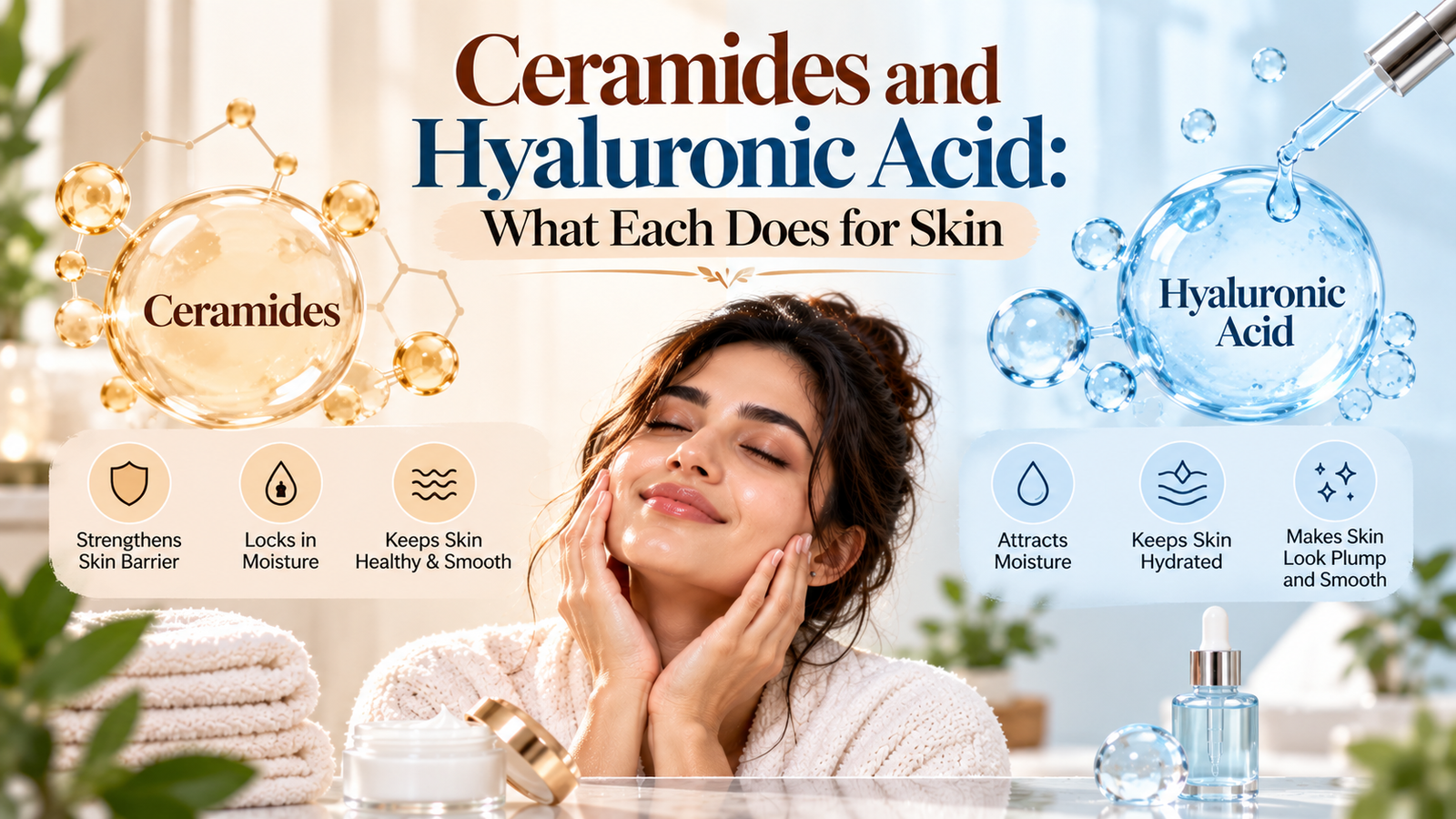
- Humectants: glycerin, hyaluronic acid and similar ingredients that draw water into the skin.
- Emollients and lipids: ceramides, plant oils and fatty alcohols that soften skin and help hold moisture in.
- Actives: niacinamide, vitamin C, alpha arbutin, glutathione and acids such as AHA or BHA, which target specific concerns.
- Preservatives: they keep a product safe from bacteria and mould, and are necessary in water-based products.
- Texture agents and stabilisers: they give a product its feel and keep it from separating.
How Do You Spot the Active Ingredients?
Look for the names that you actually want, such as Niacinamide, Glutathione, Alpha Arbutin, Hyaluronic Acid or Ceramide, and check where they appear in the list. An active in the first half of the list is likely present at a meaningful level, while one at the very end may be there in a very small amount. Brands that publish the percentage of their key actives make this easier, but if there is no percentage, the position in the list is a helpful guide.
Which Ingredients Might Irritate Sensitive Skin?
Sensitive skin often reacts to strong fragrance, essential oils, high amounts of alcohol and some preservatives or colourants. These do not irritate everyone, so you do not need to fear them, but if your skin is easily irritated it is wise to be careful. Fragrance may appear as Parfum or Fragrance, and many essential oils appear by their plant names. If you have known allergies, compare the list with the ingredients that have caused trouble before.
Natural vs Synthetic: Does the Label Matter?
| Idea | Common belief | What is more accurate |
|---|---|---|
| Natural | Always gentle | Some natural ingredients, such as essential oils, can irritate |
| Synthetic | Always harsh | Many lab-made ingredients are very gentle and well studied |
| Fewer ingredients | Always better | Depends on what the product needs to do and stay safe |
| Chemical-free | Safest | Everything, including water, is made of chemicals |
How Do You Read INCI Names?
Ingredient names on labels follow an international system called INCI, so the same name appears worldwide. A few examples help: Aqua is water, Glycerin is glycerol, Niacinamide is vitamin B3, Tocopherol is vitamin E, and Sodium Hyaluronate is a form of hyaluronic acid. If you do not recognise a name, search for it rather than guessing, and use reputable sources such as dermatology associations and published reviews.
A Simple Five-Step Way to Check a Label
- Read the first five ingredients to understand the base and texture.
- Find the active ingredients that match your goal and see where they sit in the list.
- Scan for anything that has irritated you before, such as strong fragrance.
- Check that the product fits your skin type and routine, not just a trend.
- Patch test on a small area for a day before using it on your whole face.
How Does Beaukind Fit Into This?
Beaukind is an Indian, cruelty-free skincare brand, and its range is built around active ingredients that are easy to recognise on a label. The Beaukind Faceserum and the Beaukind Facewash both use skin-supporting ingredients such as niacinamide and glutathione, so you can practise reading their labels and see how the actives line up with your goals. For more on how these ingredients work together, read our guide on whether you can use niacinamide with vitamin C.
Common Label-Reading Mistakes
- Judging a product only by one famous ingredient on the front of the pack.
- Assuming that a longer or shorter list is always better.
- Ignoring the concentration and position of key actives.
- Skipping a patch test because the label says natural or dermatologically tested.
Understanding Marketing Claims Next to the List
The front of a pack is designed to sell, while the back is designed to inform. Phrases such as clinically proven, dermatologist tested or science-backed are not the same as a guarantee that a product will work for you. Use them as a prompt to look at the list and ask a few questions. Does the product contain the active that the claim is about? Is that active high enough in the list to matter? Is the formula suitable for your skin type? A product with a short, honest list and a clear purpose often serves you better than one with a long list of impressive-sounding names.
What About Percentages and Strengths?
Some actives have a typical range where they work well without being too strong. For example, niacinamide is commonly used at a few percent, and acids such as AHAs and BHAs are used at lower strengths for regular use. Higher is not always better, because stronger products can irritate the skin and weaken the barrier. If a product lists a percentage, read it together with the rest of the formula. If it does not, you can still judge it by position in the list and by how your skin responds over a few weeks.
How Should You Store and Check Products?
Reading the label is not only about ingredients. Look for the manufacturing date, the batch number and the period after opening symbol, which shows how many months a product is meant to be used once opened. Keep products away from direct sun and heat, close lids properly and avoid dipping fingers into jars with dirty hands. If a product changes smell, colour or texture, stop using it. These small checks help products stay safe and effective for their full life.
Key Takeaways
- Ingredients are listed from highest to lowest concentration, down to about one percent.
- The first few ingredients show what the product is mostly made of.
- Look for your target actives and check where they sit in the list.
- Natural does not always mean gentle, and synthetic does not always mean harsh.
- A patch test is the best personal check of all.
Written by the Beaukind Skincare Team.